The Architect of Endurance:
Meet D. C. Price, Founder
D. C. Price is the Hybrid Thinker behind the mission to eliminate Systemic Debt and engineer organizational endurance. With 24 years of experience as a senior pharmaceutical consultant, he brings a rare ability to bridge technical complexity with human reality, creating systems that actually work in practice—not just on paper.
A Career Built on Solving the Hard Problems
D. C. has led global programs at Pfizer, Inc., where he managed Systemic Debt across large-scale operations and executed Tech Transfer initiatives supporting more than 150 million units. His work improved operational flow, strengthened cross-functional alignment, and removed barriers that limit performance in high-stakes environments.
He also designed the MSAT structure at Tergus Pharma, a framework that became the foundation of what is now the Apex Delivery Protocol. This protocol continues to guide organizations through precise execution, durable adoption, and long-term resilience.
The Hybrid Thinker Philosophy
D. C. operates at the intersection of technical systems and human systems. He believes that true transformation requires both to move in sync, which is why he focuses on integrating rational design, human behavior, and operational adaptability into every engagement.
His work is rooted in a single guiding idea:
Organizations don’t just need change. They need endurance.
Why He Built This Practice
After decades of watching organizations drown in accumulated friction and operational debt, D. C. Price set out to build a methodology that goes deeper than traditional consulting. The result is a discipline focused on diagnosing Systemic Debt, engineering clarity, and equipping teams with structures that sustain performance long after the project ends.
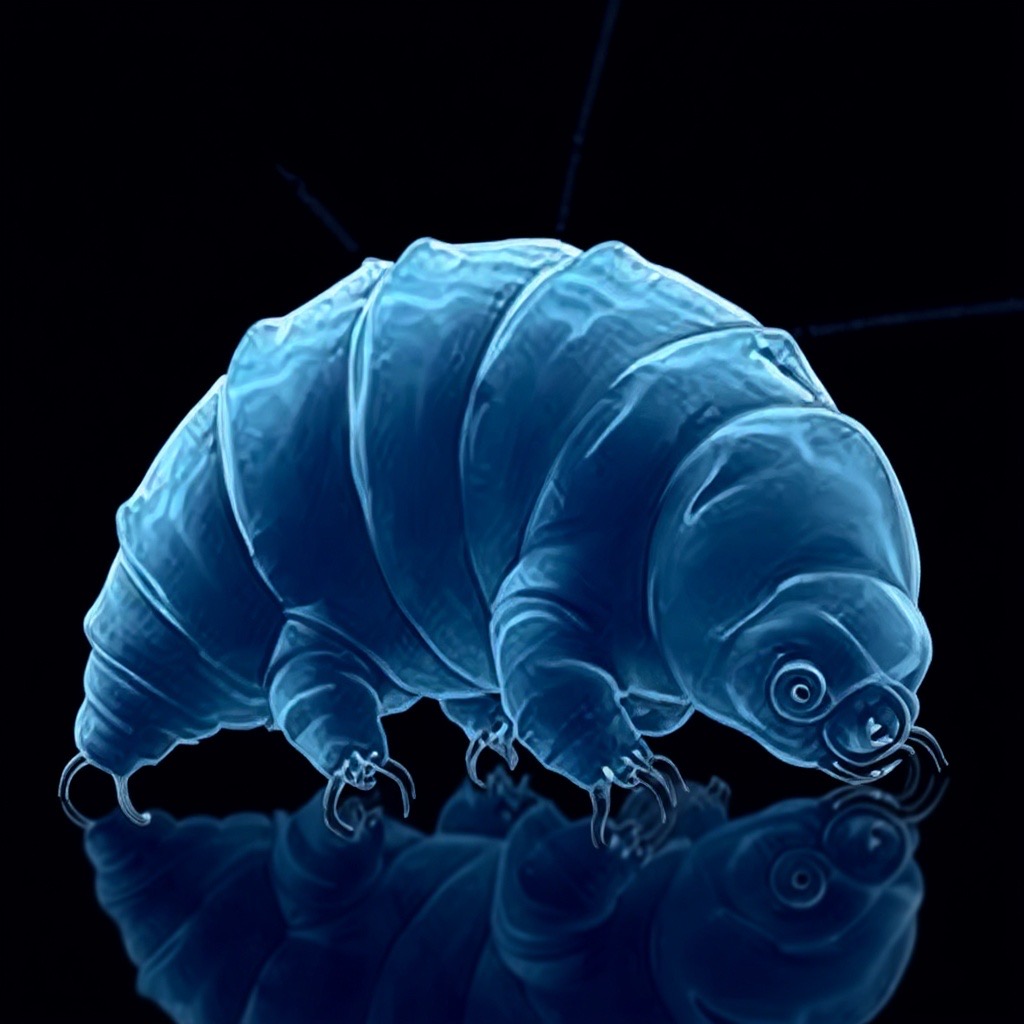
The Tardigrade
The tardigrade—also known as a water bear—is a microscopic creature barely visible to the naked eye. Yet it’s the most resilient organism science has ever documented.
Tardigrades survive:
- Extreme temperatures (from near absolute zero to 300°F)
- Intense radiation (1,000 times what would kill a human)
- Complete dehydration (years without water)
- The vacuum of space (actually sent to orbit, actually survived)
- Crushing pressure (6 times deeper than the deepest ocean trench)
They don’t survive through strength or size. They survive through strategic adaptation to bounded constraints.
Why the Tardigrade Represents Us
At The i+D.e. Agency, we don’t help organizations optimize for perfect conditions. We help them build resilient systems that function under real-world constraints:
- Incomplete information
- Limited resources
- Time pressure
- Competitive threats
- Organizational complexity
Like the tardigrade, resilient organizations don’t achieve permanence through rigidity—they achieve it through adaptive architecture.
At The i+D.e. Agency, we don’t help organizations optimize for perfect conditions. We help them build resilient systems that function under real-world constraints:
- Incomplete information
- Limited resources
- Time pressure
- Competitive threats
- Organizational complexity
Like the tardigrade, resilient organizations don’t achieve permanence through rigidity—they achieve it through adaptive architecture.
The Philosophy
The tardigrade doesn’t try to control its environment. It doesn’t optimize for a single condition. It maintains aspiration levels across multiple survival dimensions simultaneously—temperature regulation, water retention, cellular protection, metabolic flexibility.
That’s Strategic Satisficing made biological.
When conditions change, the tardigrade adapts without losing its core function. It enters cryptobiosis (suspended animation) when necessary, then reactivates when viable. It doesn’t fight constraints—it works within them.
That’s how we approach organizational design.
Blue Light Infrastructure
The tardigrade represents what we build:
Not systems that break when conditions aren’t perfect.
But systems that adapt, persist, and regenerate under pressure.
Microscopic but mighty. Humble but resilient. Built to survive what kills everything else.
That’s blue-light architecture. That’s the Resilience code.
That’s The i+D.e. Agency
Website References and Links:
The tardigrade—also known as a water bear—is a microscopic creature barely visible to the naked eye. Yet it’s the most resilient organism science has ever documented.[1][2]
Tardigrades survive:
– Extreme temperatures (from near absolute zero to 300°F)[3]
– Intense radiation (1,000 times what would kill a human)[4]
– Complete dehydration (years without water)[5]
– The vacuum of space (ESA TARDIS experiment, 2007)[6]
– Crushing pressure (6 times deeper than the deepest ocean trench)[7]
—
**References:**
[1] Jönsson, K.I. (2008). “Tardigrades as a potential model organism in space research.” Astrobiology, 8(4), 757-767.